The Recovery Lineup
Tissue repair plus sleep-window GH support, built around a hard training block.
Why this stack
The community default for recovery layers the healing pair with a clean GH secretagogue: BPC-157 and TB-500 cover local and systemic tissue repair, ipamorelin at bedtime supports the GH pulse that drives overnight recovery, and GHK-Cu rides along for collagen and skin. Everything except the GHRP class rests on preclinical evidence, and each protocol page grades its own.
The protocol at a glance
Community-reported maintenance amounts, derived live from each compound's protocol page. Click through for titration phases, reconstitution steps and the evidence grading behind every number.
Tissue repair
| Compound | Dose | Frequency | Recon | Units/injection |
|---|---|---|---|---|
| BPC-157 Animal data only |
600 mcg | Once daily | 10 mg + 1 mL | 6 units (0.06 mL) |
| TB-500 Animal data only |
1 mg | Once daily | 10 mg + 1 mL | 10 units (0.1 mL) |
Recovery support
| Compound | Dose | Frequency | Recon | Units/injection |
|---|---|---|---|---|
| Ipamorelin Human trial data |
250 mcg | Once daily at bedtime | 10 mg + 1 mL | 2.5 units (0.025 mL) |
| GHK-Cu Animal data only |
2 mg | Once daily, 5 days on / 2 off | 50 mg + 2.5 mL | 10 units (0.1 mL) |
How it is run
- Healing pair daily, morning or post-training; ipamorelin at bedtime, fasted.
- GHK-Cu commonly runs 5 days on, 2 off.
- 6 to 8 week blocks around a training cycle, then a full rest.
What the components report
Reported upsides
- BPC-157: Consistently accelerates healing in rodent injury models
- BPC-157: Anti-inflammatory and cytoprotective in preclinical work
- TB-500: Promotes cell migration and tissue repair in preclinical models
- TB-500: Anti-inflammatory properties reported in animal work
- Ipamorelin: Selective GH secretagogue with minimal side effects
- Ipamorelin: Does not significantly raise cortisol or prolactin
- GHK-Cu: Copper peptide supporting skin and tissue remodelling
- GHK-Cu: Stimulates collagen synthesis and wound healing
Cautions
- BPC-157: No human safety data from controlled trials
- BPC-157: Injection site reactions
- TB-500: No human clinical safety data
- TB-500: Injection site reactions possible
- Ipamorelin: Injection site reactions
- Ipamorelin: Mild headache occasionally
- GHK-Cu: Injection site reactions
- GHK-Cu: Skin discolouration at injection site (copper)
Pulled from each compound's benefits and side effects section. Individual responses vary. Not medical advice.
Track this stack
The free tracker logs each component on its own schedule, rotates injection sites across the whole stack, and counts down every vial with a reorder heads-up.
Sourcing the stack
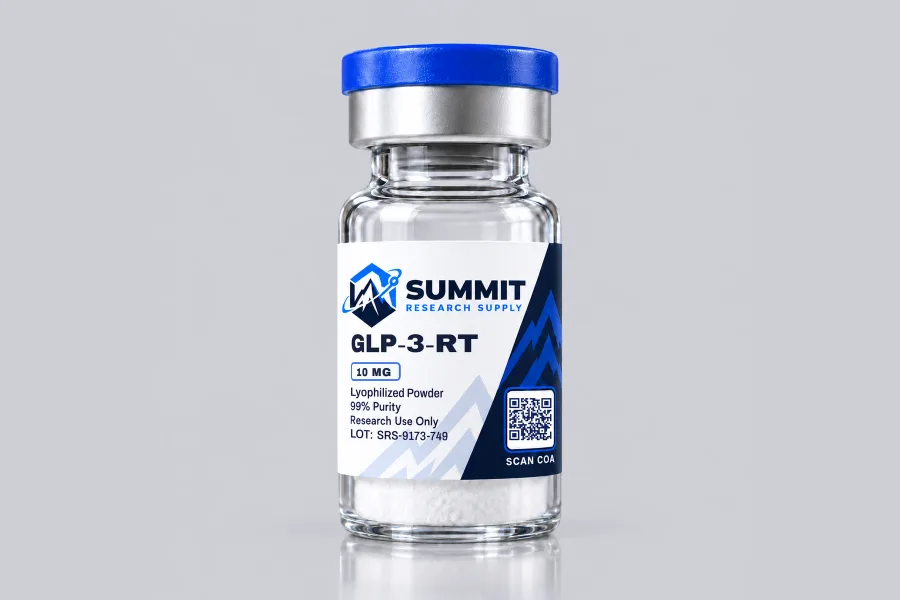
Same rule as every protocol page: the batch COA matters more than the price. Summit Research Supply is the supplier we feature; code PEPDOSE applies to each component.
BPC-157 →TB-500 →Ipamorelin →GHK-Cu →
Summit links are affiliate links. Our COA checklist applies the same way to any vendor.