Start here
Eight steps from an unopened vial to a draw you can actually trust, in the order they matter. Every step links to the tool or guide that does the work. Nothing here recommends a compound or an amount — it covers the measurement and verification that apply regardless of what you are working with.
The three things that cause most errors
- Concentration is your choice, not the vial’s. The same 10 mg vial can produce a 5-unit draw or a 50-unit one depending on the water you add.
- Units are volume, not amount. "20 units" means nothing until you know the concentration behind it.
- Most of these compounds have no human trial. Check the evidence badge before you trust any schedule you find anywhere, including here.
Understand what you are holding
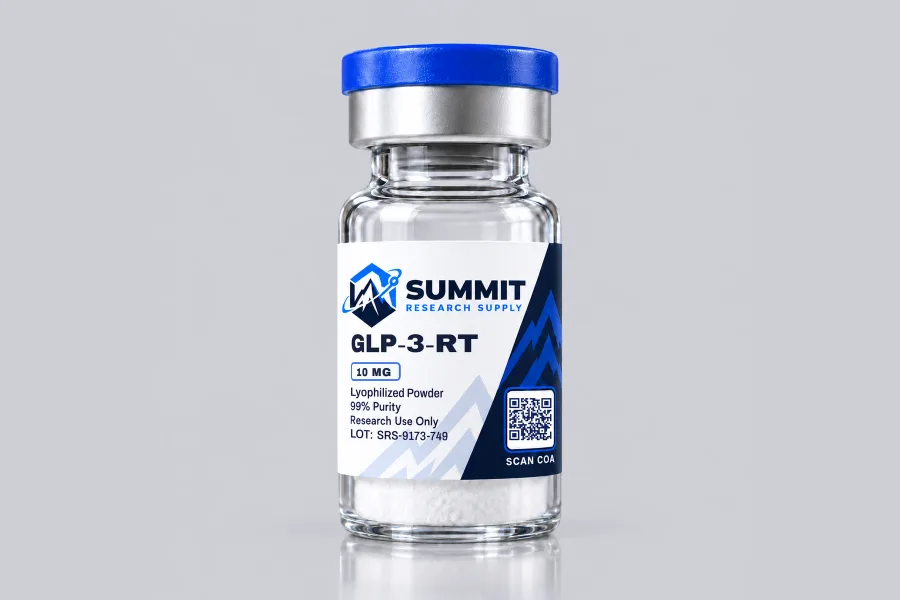
A research peptide ships as lyophilized — freeze-dried — powder, because that is its stable form. It is not usable until it is dissolved, and the concentration it ends up at is decided by you, not by the vial. That single fact drives everything else on this page.
Get the supplies together
Bacteriostatic water, U-100 insulin syringes, alcohol prep pads, and somewhere cold and dark to keep the vial. Bacteriostatic rather than sterile water matters if you intend to enter the vial more than once — the 0.9% benzyl alcohol is what makes repeat entry reasonable.
Do the reconstitution math before you mix
Concentration is vial size divided by water added. That number determines every draw afterward, so decide it deliberately rather than defaulting to whatever volume is on hand. More water gives larger, easier-to-read draws; less water fits bigger amounts into one syringe.
Mix without wrecking it
Run the water slowly down the inside wall of the vial rather than blasting it onto the powder, then swirl gently until clear. Never shake — foaming denatures peptides. If it does not go clear, something is wrong and the vial is not usable.
Convert the amount into units
Your target amount divided by concentration gives millilitres; times 100 gives units on a U-100 syringe. Units are a volume marking — they say nothing about how much compound is in them until you know your concentration.
Store it properly from the first day
Refrigerate the reconstituted vial, keep it dark, and do not freeze it. Freeze-thaw damages peptides in solution. Dry powder is the form that tolerates long storage.
Verify what you actually bought
Ask for the certificate of analysis for your batch, and check the batch number on it against the vial in your hand. A COA for a different lot describes material you do not have.
Find out what is actually known
Before anything else, look up what evidence exists for the compound. Most research peptides have never been through a human trial, and the protocol pages label that plainly rather than implying a schedule exists where none does.