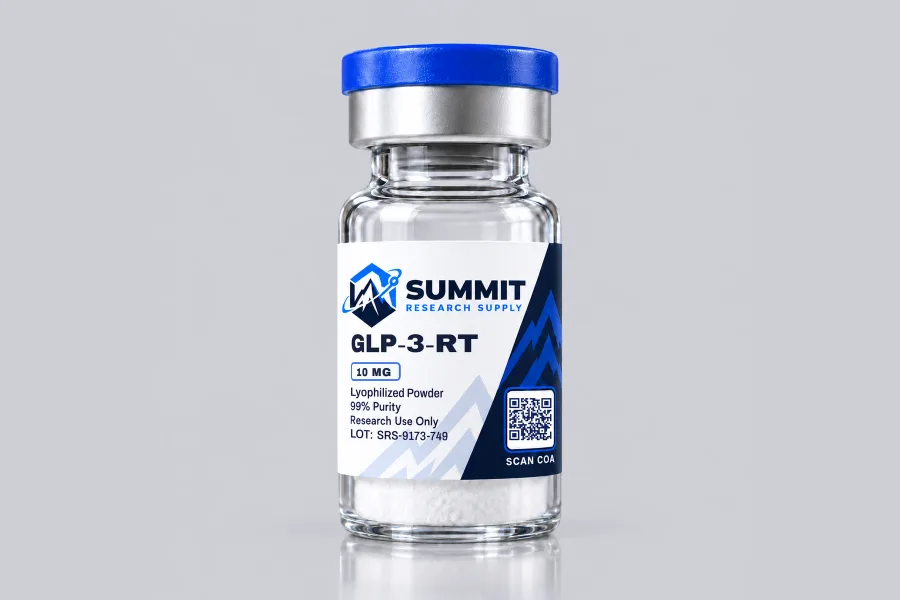
How to Read a Peptide Vial Label
A research peptide label carries less information than most people assume, and one of the numbers on it means something slightly different from what it appears to. Here is how to read one properly and what to cross-check.
The mg figure
The headline number is the nominal amount of compound in the vial — 5 mg, 10 mg, and so on. This is the number you enter as vial size in a calculator.
The subtlety: it is the labelled amount, which is not necessarily the same as net peptide content. A vial can weigh out correctly while a portion of that mass is water and counter-ions rather than peptide. Where a supplier reports net peptide content on the COA, that is the more complete figure.
Batch or lot number — the one that matters most
This is the single most useful thing on the label, because it is what ties your specific vial to a specific certificate of analysis. A COA without a matching batch number tells you nothing about what you are holding.
If the label has no batch number at all, that is a meaningful red flag about the supplier rather than a minor omission.
What "research use only" signals
The RUO and "not for human consumption" language defines what the seller is offering: a laboratory reagent, not an approved medicine. It is a legal and regulatory framing, not a quality statement, and it appears on well-documented and poorly-documented products alike.
What is usually missing
Most research labels omit far more than they include. Expiry or retest date, storage conditions, net peptide content, purity, and the diluent to use are all commonly absent. That absence is normal for this category rather than suspicious — but it means the COA, not the label, is where the real information lives.
What to cross-check
Match the batch number on the vial to the batch number on the COA. Confirm the compound name matches exactly — similar names are easy to misread, and a few compounds have near-identical labels. Check the mg figure matches what you were sold, and note whether the supplier states net peptide content anywhere.
Our COA reading guide covers the certificate side, and the COA checklist scores one.
Key takeaways
- The mg figure is the labelled amount, which may exceed net peptide content.
- The batch number is the most important item — it links the vial to a COA.
- RUO language is a regulatory framing, not a quality signal.
- Labels routinely omit expiry, storage and purity; the COA carries those.